The Challenge
Heightened regulatory pressures under the Building Safety Act exposed a fragmented Quality Management System (QMS), where 76% of projects missed deadlines and 66% failed to hit target margins


Client Case Study | Enterprise Flow
Our client is a major UK construction organisation operating at a massive national scale, coordinating thousands of technical users across complex civil and commercial builds.
The introduction of the Building Safety Act (2022) fundamentally rewritten the compliance parameters for the UK construction industry. The legislation mandated strict gateway approvals, clear lines of accountability, and an uncompromised "Golden Thread" of lifecycle information. For an organisation of this scale, regulatory failure was not simply an audit risk; it threatened to halt multi-million-pound projects entirely at critical gateway intervals, compounding an existing commercial baseline where 76% of projects were facing delivery delays.
The primary operational barrier blocking delivery was an antiquated, over-engineered QMS that had devolved into a reactive archive rather than a live execution framework.

With over 1,875 disconnected documents in circulation, frontline teams were buried in administrative noise. There was zero visual clarity distinguishing statutory mandatory procedures from optional supporting guidance.
Operating across a massive web of distributed projects, teams lacked a governed method to track adherence. Processes were modified locally, leading to massive delivery variability that directly translated into 66% of projects failing to achieve their anticipated margins.

Compliance was evaluated retrospectively—reviewed after the fact rather than monitored in real time. This lack of visibility and clarity left corporate leadership exposed, unable to intervene early or predictably guarantee alignment at scale.
Head of Quality AssuranceProject4 have come in, given us that structure, helped us through some of the immense challenges, and ultimately enabled us to produce a product we can be proud of that’s going to benefit the business.

Flow Fog
A lack of clarity over how work is flowing, the true status of work, or bottlenecks in the system.

Activity Anarchy
Where teams are extremely busy but not necessarily productive, because there is no clear link to necessary learning, decisions, risk retirement or uncertainty removal.
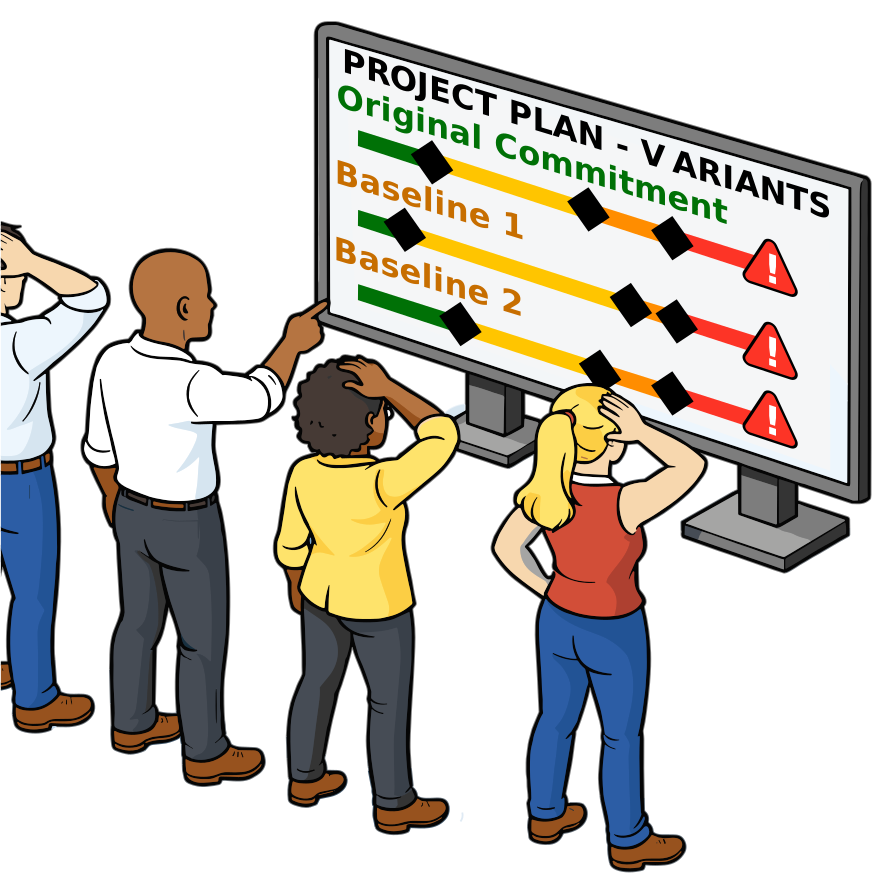
Confidence Chaos
The fundamental struggle of innovation work: the sheer volume of unknowns regarding what needs to be done and how to do it. This chaos makes it impossible to provide reliable estimates for work content or completion dates with high degrees of certainty.
Traditional compliance consultancies often attempt to fix documentation issues by writing more manuals. Project4 introduced a lean operational excellence system designed to embed user-led clarity and data transparency.

We embedded within the business to collaboratively review the entire scope using a strict "3S" framework: Sort, Set in Order, and Standardise. Teams actively challenged the existence of every procedure, form, and rule.

We shifted the business away from a static, document-heavy library. We engineered an end-to-end process landscape mapped directly to RIBA, CPQP, and ISO standards, introducing role-specific swimlane designs and metadata parameters.

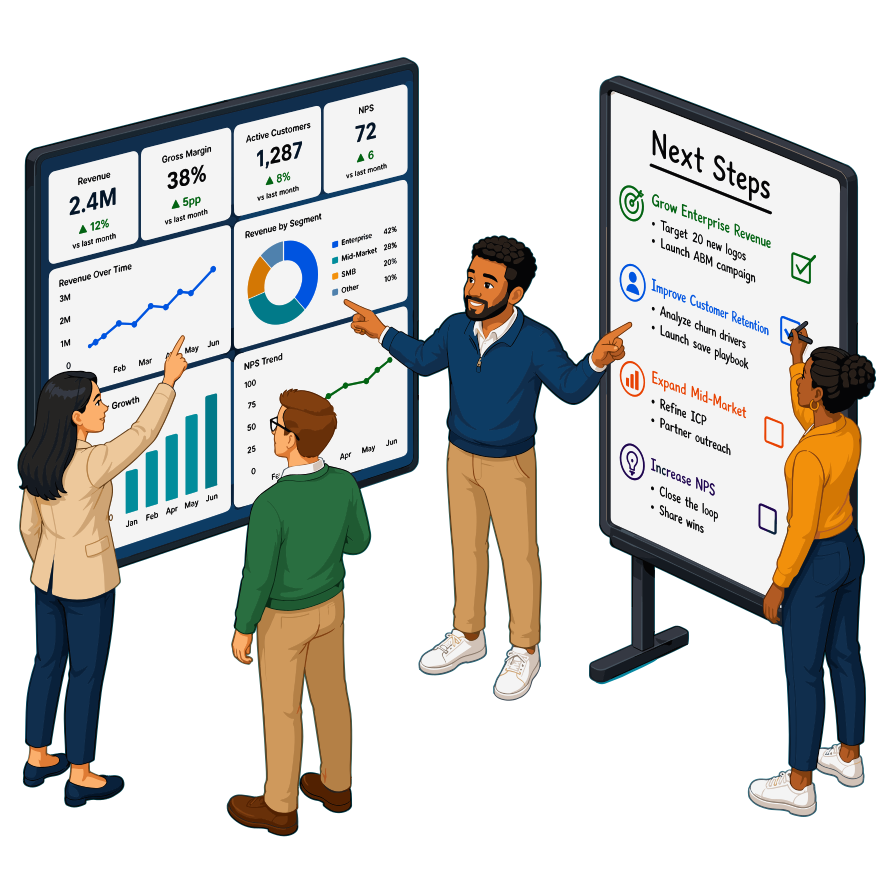
Strategy, delivery milestones, and cross-team dependencies were consolidated into iObeya. This created a live space for fortnightly execution sprints. To anchor long-term performance, we integrated automated Quick Start Guides for immediate field-level guidance.
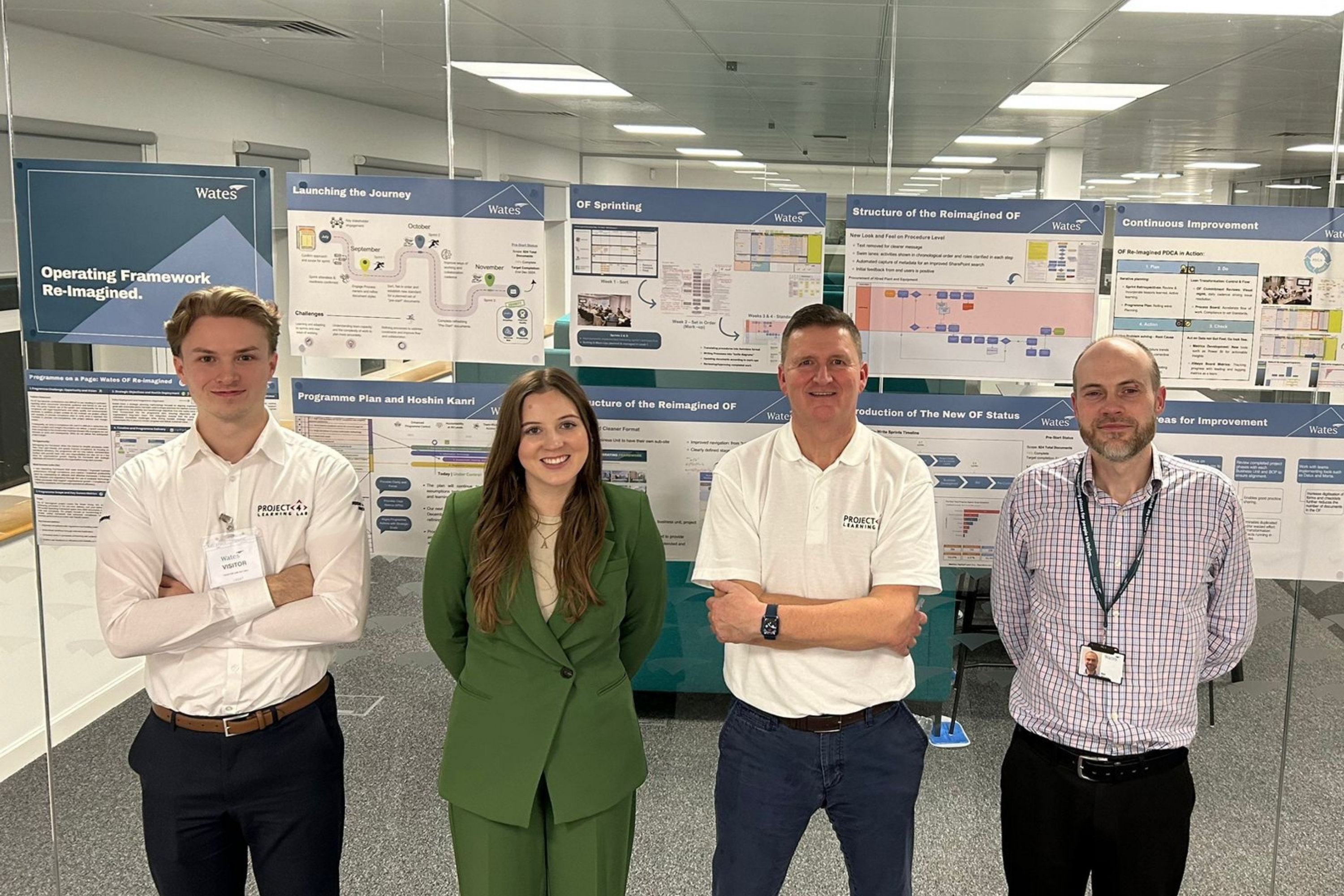
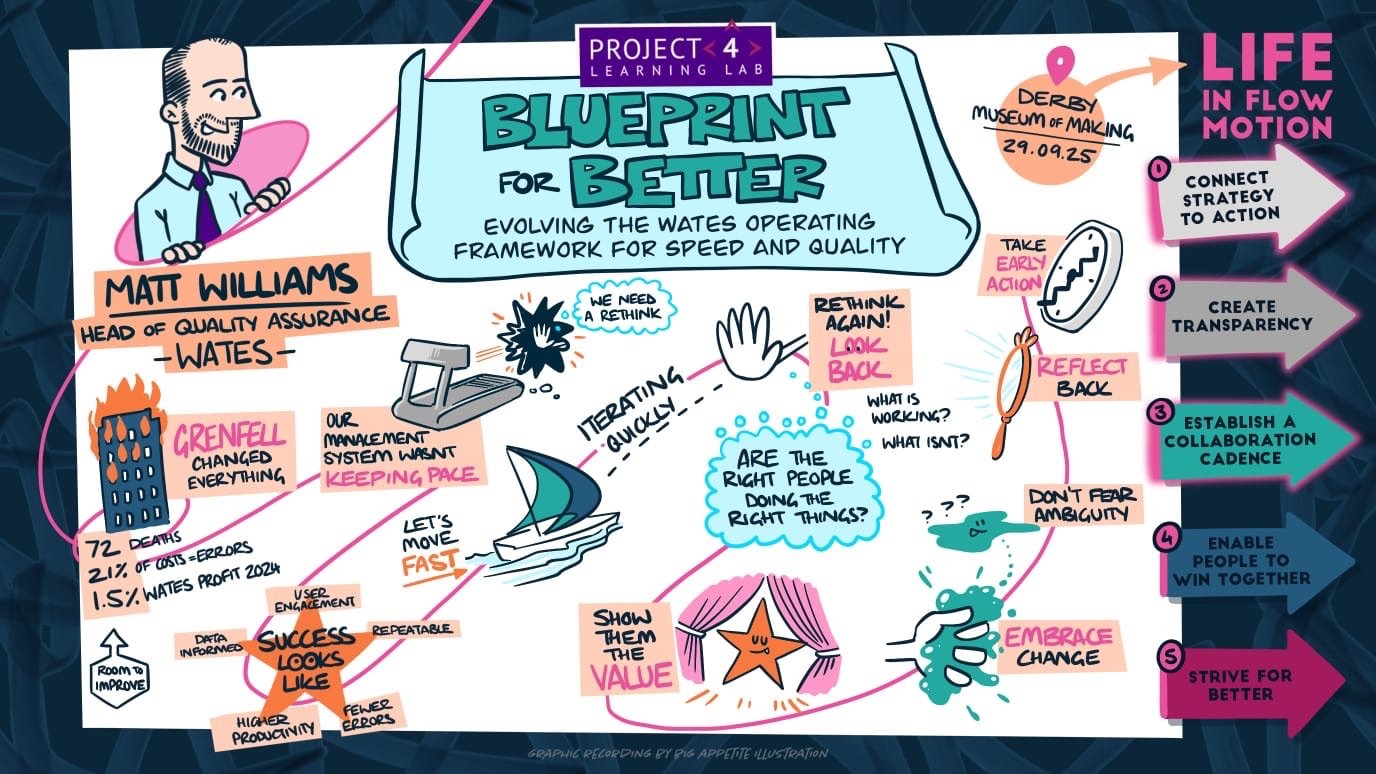
The transformation replaced an administrative bottleneck with an optimized corporate asset, proven across extensive user acceptance testing.

QMS Complexity Reduction
31% overall content contraction across the reviewed scope
Governance Refinement
35% reduction in core procedures; 40% reduction in guidance noise
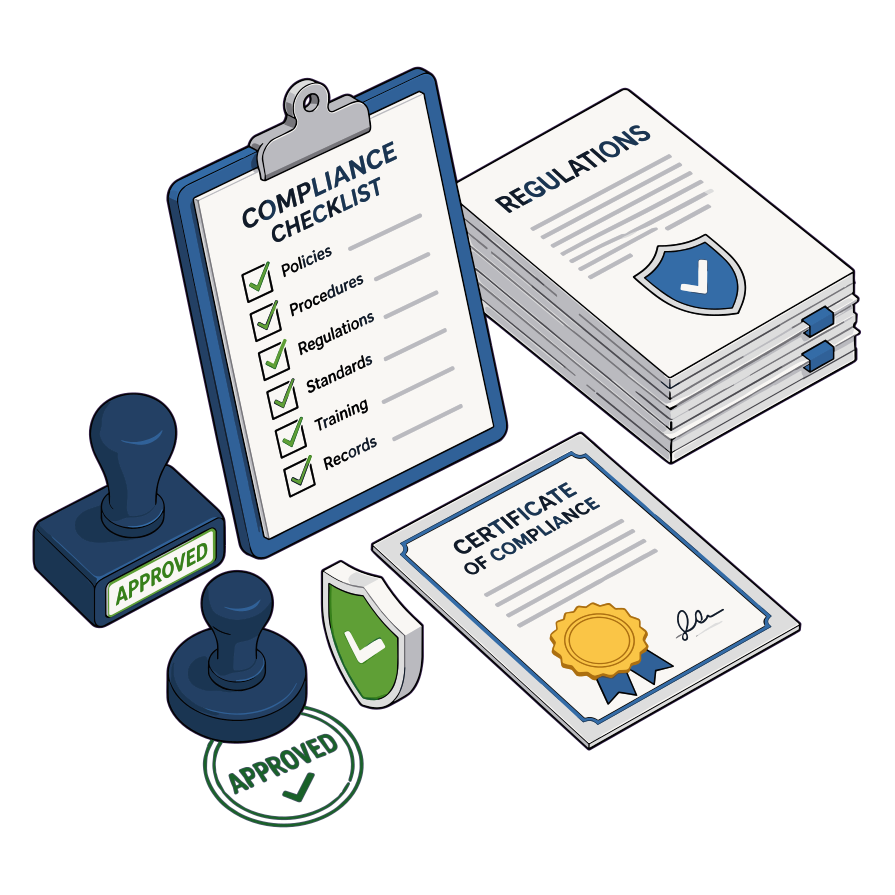
Measurable Compliance
30% increase in verified process compliance across the lifecycle
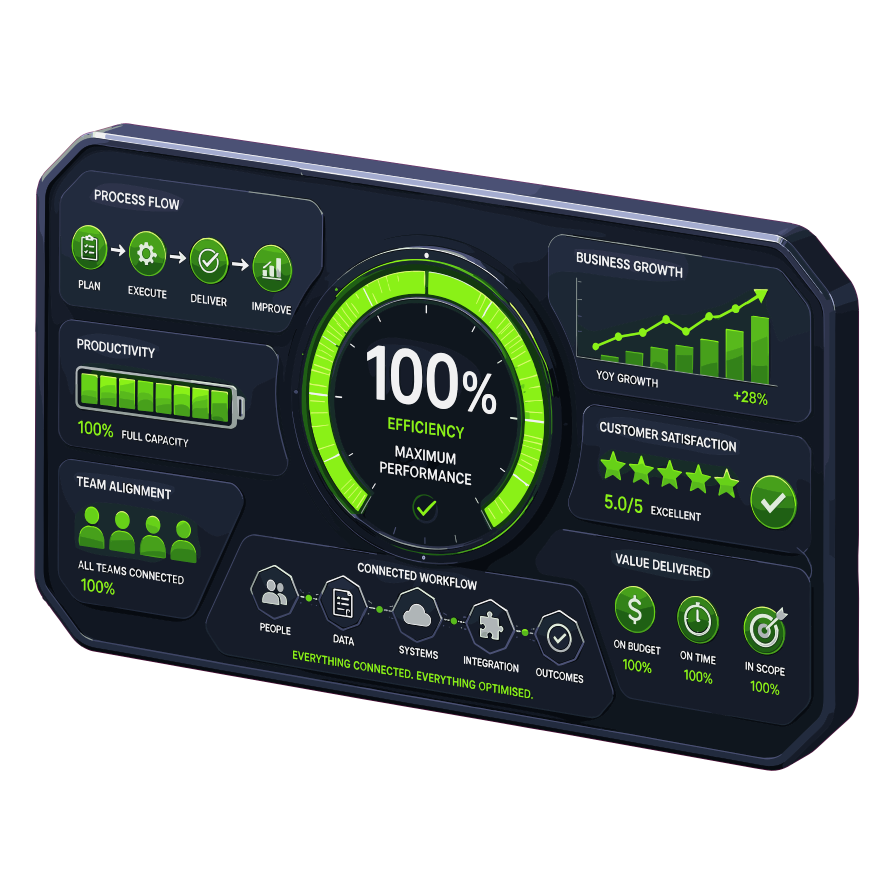
Information Lead Time
84% of users reported reduced time to find critical data

System Usability Score
94% of users confirmed procedures are easier to navigate
We established a robust Process Owner Network to ensure long-term, decentralised system maintenance. Using our structured Tell Me, Show Me, Let Me, Coach Me capability transfer framework, the client’s internal assurance branch was fully upskilled to independently govern the ecosystem for 5,000+ active cross-platform users.
NPS®
Achieved Net Promoter Score of 100
Corporate compliance under modern regulatory acts cannot survive on paper-heavy assumptions. By embedding automated stage-gates, role-based visual search tools, and continuous visual sprint governance, this construction leader successfully moved compliance from an administrative autopsy to a dynamic tool for operational de-risking.
We diagnose, remediate, resolve, report and enable. Let's find your flow.